Address
Work Hours
Address
Work Hours

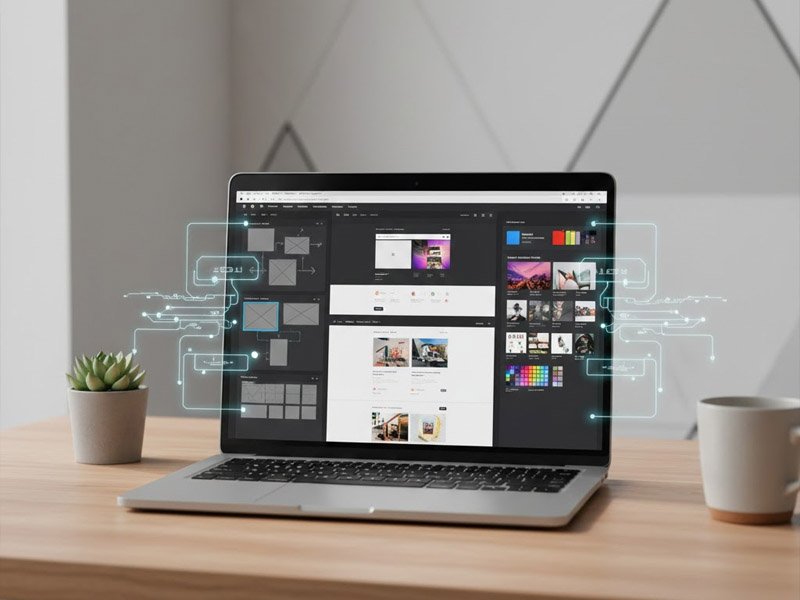
This AI website design stack introduces five beginner-friendly tools that help creators design layouts, build websites, and generate visuals faster with less overwhelm.
AI website design stack tools can help beginners design, structure, and publish websites faster without feeling overwhelmed.
Until now, we’ve focused on a core group of tools that help with writing, planning, visuals, and communication.
But this space is much bigger than one small stack.
This post introduces a new set of AI-powered tools that many creators use to design websites, build layouts, generate visuals, and speed up their creative workflow.
Each tool has a different role, and together they form a simple, beginner-friendly website design stack.
Figma is a popular design tool used for UI/UX layouts, mockups, and brainstorming.
With Figma AI, beginners can now:
It makes the early design process feel less overwhelming and more guided.
VA NOTE → Insert affiliate link here
Framer allows you to create real websites without writing code.
Its AI features help you:
This makes it great for freelancers or small business owners who want to launch quickly.
VA NOTE → Insert affiliate link here
Relume is built for speed.
Its AI tools help you:
People use it to skip hours of manual planning and jump straight into design.
VA NOTE → Insert affiliate link here
Kittl makes graphic work simple for beginners.
Its AI tools allow you to:
It’s especially helpful for people who want clean visuals without learning complex design software.
VA NOTE → Insert affiliate link here
Leonardo AI is known for sharp, customizable images.
You can use it for:
This AI website design stack gives beginners a clearer way to move from idea to design without relying on complex coding tools.
It gives your website or content a unique visual feel.
To help beginners understand how these tools connect, here’s the simple workflow they support:
Idea → Wireframe → Design → Build → Visuals → Publish
This keeps things organized and prevents new creators from feeling overwhelmed.
People who work visually tend to prefer tools that show results quickly rather than relying only on text-based workflows.
When AI helps generate layouts, wireframes, or graphics, beginners feel more confident taking the next step.
These tools fit into specific “roles,” and you can swap any of them with alternatives later:
This flexibility keeps your workflow sustainable even as new tools appear.
Another reason this AI website design stack works well is that it removes the fear of starting from scratch. Many beginners hesitate to design a website because it feels technical or requires advanced skills. With AI assisting each stage — from wireframes to layouts to visuals — the process becomes more approachable. You can experiment, make changes quickly, and learn design principles through guided suggestions instead of trial and error. This builds confidence while helping you create cleaner, more professional results.
Future posts will explore each tool, alternatives, and variations of this stack.
Explore the next tools we’re covering → click here